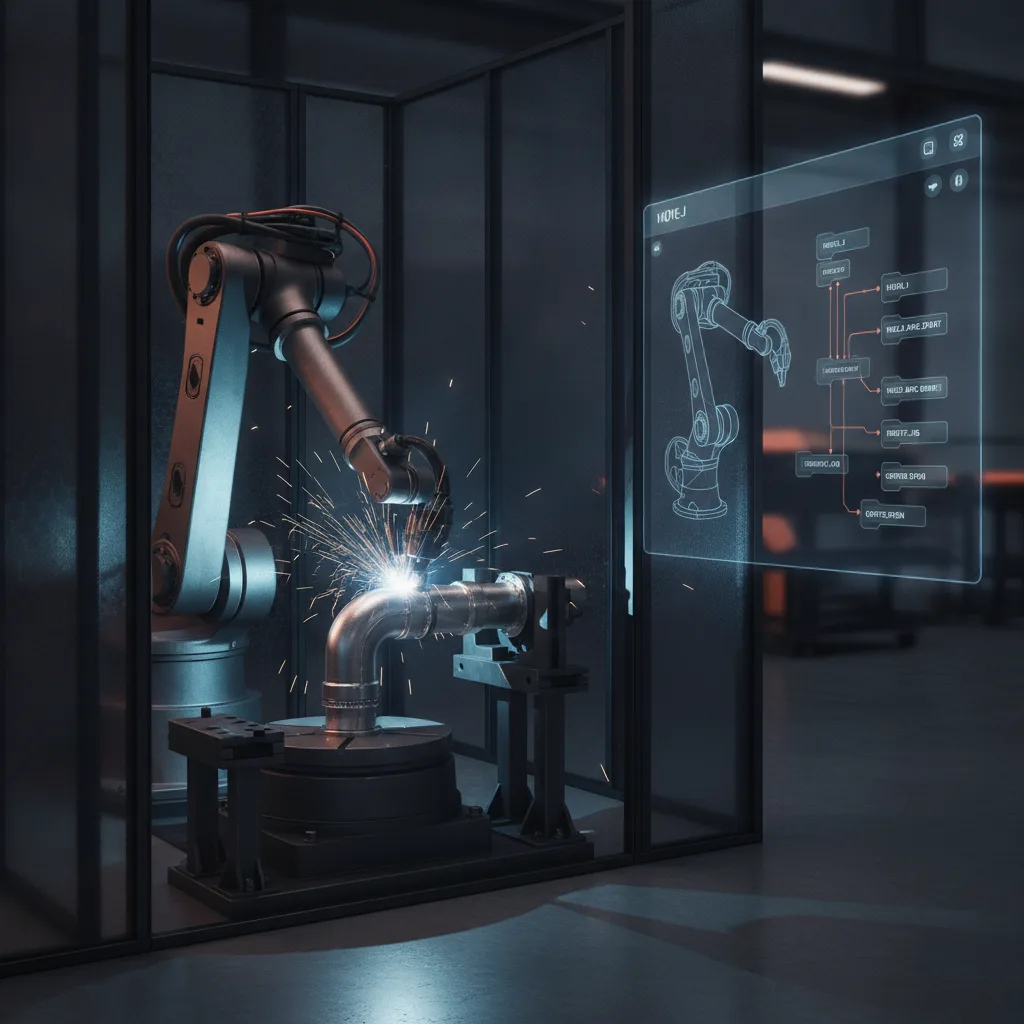
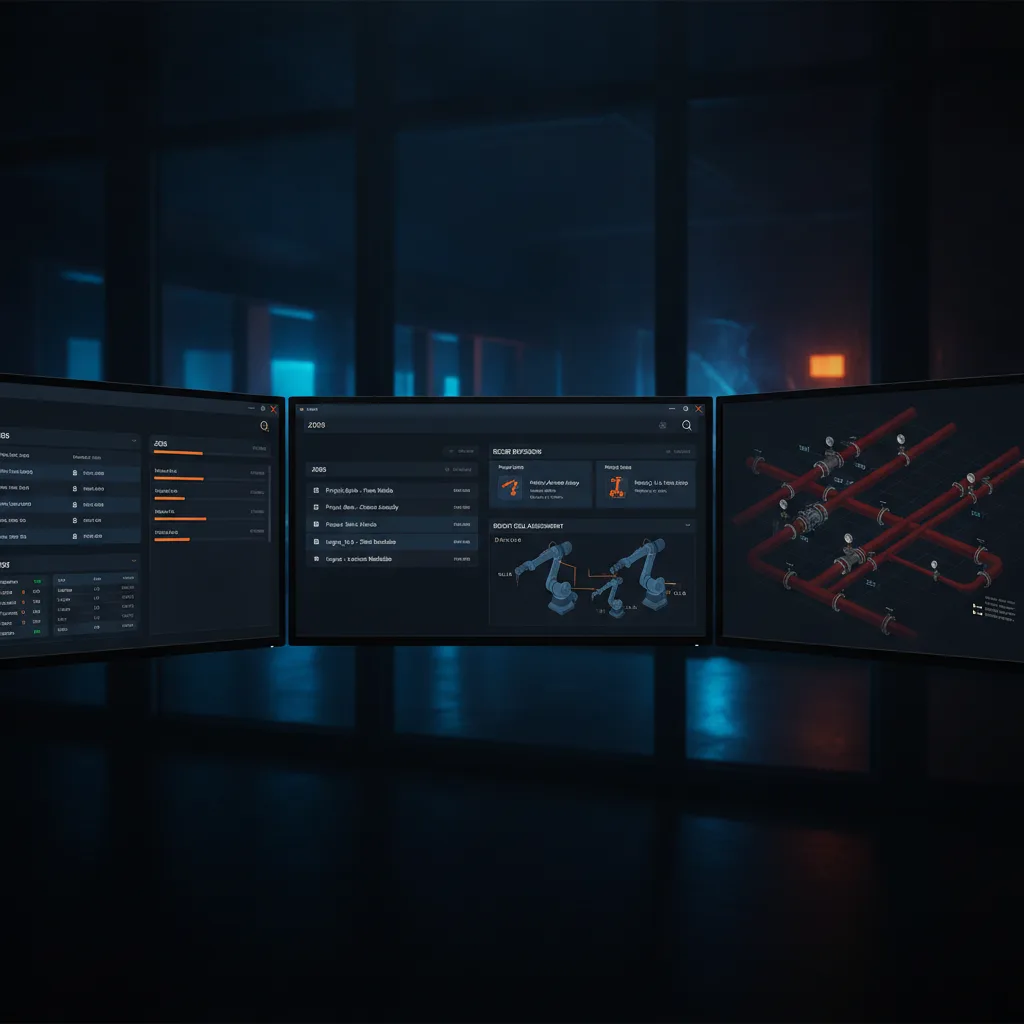
Overview
Fire-protection and drainage fabricators do not want a general robot IDE. They want a constructor: pick fittings, joints, and cell constraints, then emit a welding program the manipulator can run. ForgeKit is that generator — and the operational layer around it, so a shop treats programs like jobs in a CRM rather than files on a USB stick.
Sprinkler mains, branch lines, grooved couplings, drainage collectors — the vocabulary is pipes and joints, not raw poses. The constructor compiles that vocabulary into motion, weave, and weld parameters the cell already understands.
The challenge
Teach-pendant programming does not scale when every rack is a slightly different isometric. Offline robot programming is too generic. The shop still needs order tracking, who approved a recipe, and which cell ran it.
Approach
- Domain constructor: fittings and joints first, robot poses as a compile step.
- Generate control programs for the welding cell instead of hand-teaching every isometric.
- CRM-shaped ops: customers, jobs, recipes, revisions, cell assignment, sign-off.
- Keep the operator in the loop for dry-run and first-article weld.
Outcomes
- Faster path from isometric to a runnable weld program.
- Shop memory — which recipe ran, on which cell, for which job.
- A reusable pattern for other “constructor + operations” industrial tools.