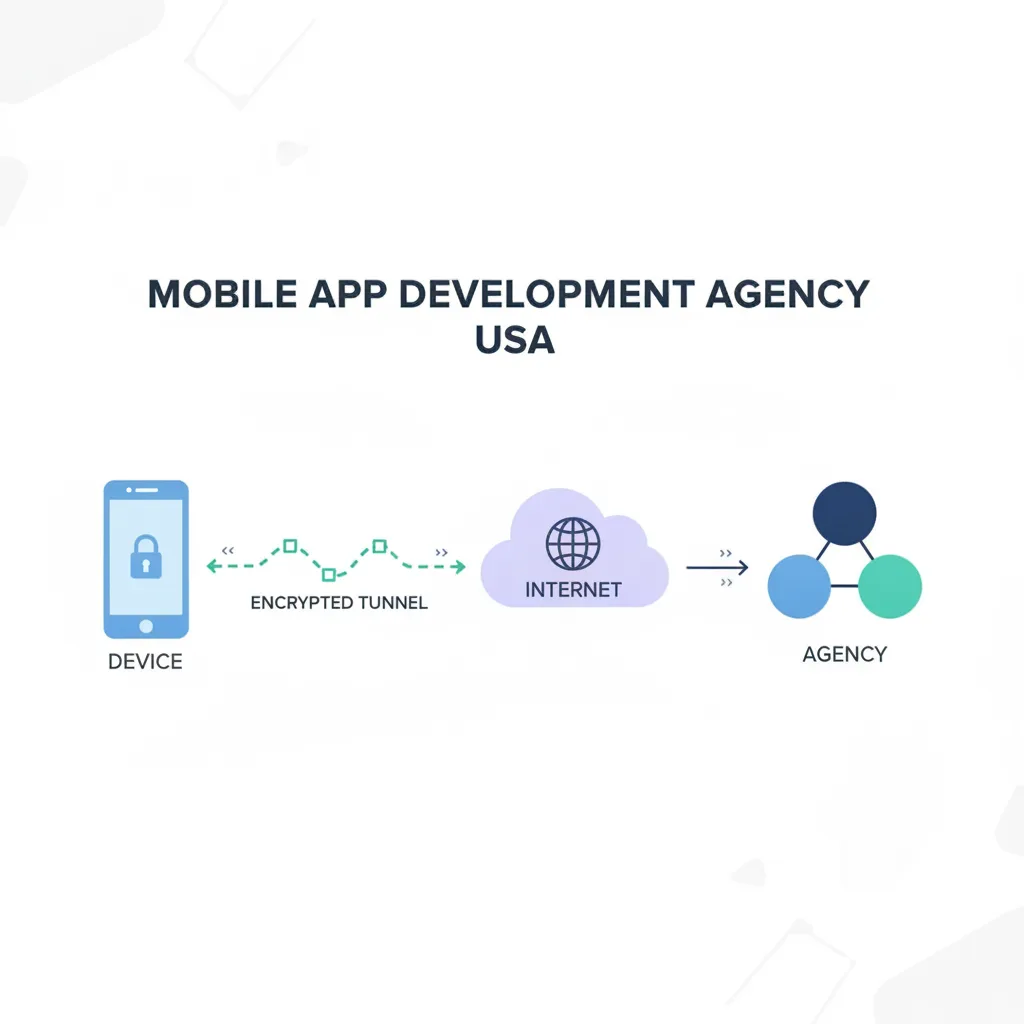
The US mobile app market generates over $200 billion annually, yet 90% of apps fail within their first year. The difference between success and failure isn't just the idea—it's execution. At LunexLab, we're a mobile app development agency USA-based that focuses on building products that actually ship, scale, and survive in competitive markets.
The US mobile app market generates over $200 billion annually, yet 90% of apps fail within their first year. The difference between success and failure isn't just the idea—it's execution. At LunexLab, we're a mobile app development agency USA-based that focuses on building products that actually ship, scale, and survive in competitive markets.
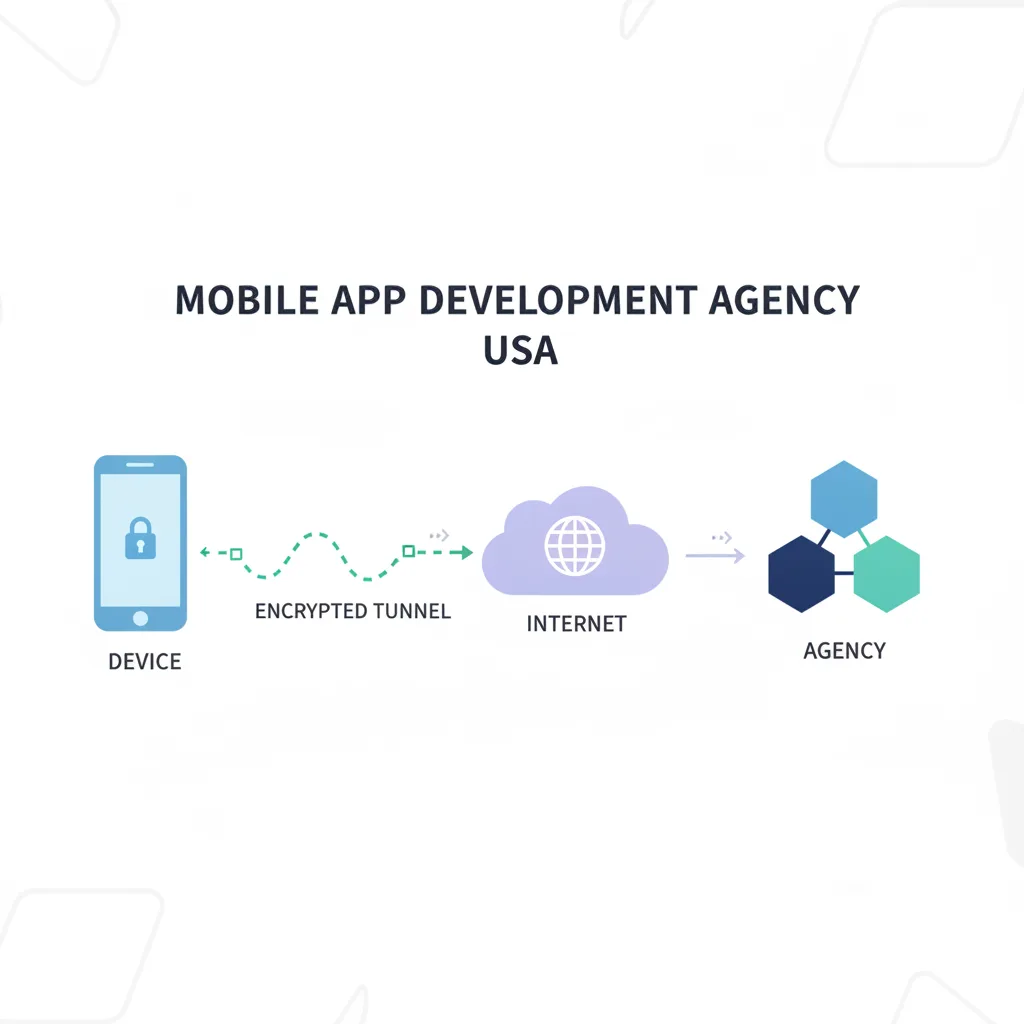
We're not a traditional mobile app development company USA churning out template apps. We're a product-focused studio that builds real software. Our flagship consumer product, Fubble VPN, demonstrates our capability to deliver production-ready apps from concept to App Store launch. When you work with LunexLab, you're partnering with a team that understands both the technical complexity and product strategy needed to succeed.
Whether you need native iOS and Android development, cross-platform solutions, or AI-powered mobile applications, we deliver scalable architecture and modern tech stacks that founders and product teams can trust. Ready to start? Contact us to discuss your project.
What Makes a Great Mobile App Development Agency?
Choosing the right mobile app development agency USA requires looking beyond surface-level marketing claims. Great agencies demonstrate technical depth, product thinking, and proven results.
Technical Expertise Across iOS, Android, and Cross-Platform
A competent mobile app development agency must master multiple approaches to app development. Native development using Swift for iOS and Kotlin for Android delivers maximum performance and full access to platform-specific features. This approach is essential for complex applications requiring advanced graphics, augmented reality, or hardware integration.
Cross-platform frameworks like React Native and Flutter offer a different value proposition: shared codebases that accelerate development timelines and reduce maintenance overhead. These frameworks now deliver near-native performance for most use cases, making them ideal for MVPs, content-driven apps, and business applications.
The best mobile app developers USA know when to choose each approach. Native development makes sense for gaming, media-heavy apps, or when platform-specific features are critical. Cross-platform excels for rapid iteration, budget-conscious projects, and apps where code reuse delivers significant efficiency gains.
Product Thinking, Not Just Code Delivery
Technical execution means nothing without product strategy. At LunexLab, we integrate a discovery and validation phase before writing production code. This includes:
- User research and competitive analysis to validate assumptions
- Technical architecture planning to ensure scalability
- MVP scope definition to balance speed and completeness
- UX/UI design integration throughout the development process
Post-launch support isn't an afterthought—it's where products prove their value. We monitor analytics, respond to user feedback, and iterate based on real-world usage data. This approach aligns with how we built Fubble VPN, our consumer product that continues to evolve based on user needs.
Proven Portfolio and Case Studies
Any mobile application development agency can claim expertise. The proof lives in shipped products, not prototypes or mockups. When evaluating agencies, look for:
- Apps available in the App Store and Google Play Store
- Detailed case studies explaining technical challenges and solutions
- Client testimonials from founders and product teams
- Evidence of post-launch success and user retention
LunexLab demonstrates our capabilities through Fubble VPN, our flagship consumer app. This real product showcases our ability to handle complex requirements: secure networking, cross-platform architecture, intuitive UX, and ongoing feature development.
Mobile App Development Services LunexLab Offers
Our app development services USA cover the full product lifecycle, from initial concept to long-term maintenance.
Custom iOS and Android App Development
Native development delivers optimal performance and user experience. We build iOS apps using Swift and Android apps using Kotlin, leveraging platform-specific capabilities that differentiate your product:
#### iOS Development Capabilities
- SwiftUI for modern interfaces
- Core Data for local storage
- CloudKit for sync
- HealthKit and ARKit integrations
- App Store optimization and submission handling
#### Android Development Capabilities
- Jetpack Compose for reactive UIs
- Room for persistence
- WorkManager for background tasks
- Material Design 3 implementation
- Google Play optimization and review processes
Native apps excel when you need maximum performance, access to latest platform features, or when targeting a specific ecosystem exclusively.
Cross-Platform App Development
React Native and Flutter enable faster time-to-market with shared codebases that maintain platform-appropriate feel. We use cross-platform app development frameworks when:
- Speed matters for MVP development and market validation
- Budget constraints exist and shared code reduces development costs
- Maintenance efficiency is critical with updates deploying across platforms simultaneously
- Business logic dominates in content apps, e-commerce, and CRUD applications
Cross-platform development isn't a compromise—it's a strategic choice that balances technical requirements with business objectives. Our team maintains expertise in both React Native and Flutter, selecting the framework that best fits your product requirements.
AI-Powered Mobile Applications
Modern mobile apps increasingly integrate artificial intelligence for personalization, automation, and intelligent features. LunexLab specializes in custom mobile app development with AI capabilities that leverage:
#### AI Integration Capabilities
- Large language models: Conversational interfaces, content generation, intelligent search
- Computer vision: Image recognition, document scanning, augmented reality
- On-device machine learning: Privacy-preserving AI using Core ML and TensorFlow Lite
- Recommendation engines: Personalized content and product suggestions
We work with platforms like Google AI Studio for Gemini API integration and AWS App Studio for production AI deployments. Our AI implementations balance functionality with performance, ensuring responsive experiences even on mid-range devices.
For teams exploring AI app development, consider reviewing our guides on best free AI app builder options and AI app development studio tutorials.
Backend and API Development
Mobile apps require robust backend infrastructure. We design and implement scalable cloud architectures using:
#### Backend Technology Stack
- Cloud platforms: AWS (Lambda, ECS, RDS, S3) and Google Cloud (Cloud Run, Firestore)
- Real-time features: WebSocket connections, push notifications, live data sync
- API design: RESTful and GraphQL APIs optimized for mobile bandwidth constraints
- Authentication and security: OAuth 2.0, JWT tokens, encrypted data transmission
Our backend expertise extends to rapid infrastructure deployment while architecting systems that scale from MVP to millions of users without requiring complete rebuilds.
App Design and User Experience
Great apps balance visual appeal with functional clarity. Our mobile app design and development process includes:
- Wireframing and prototyping: Interactive mockups for early validation
- User interface design: Platform-appropriate aesthetics following iOS Human Interface Guidelines and Android Material Design
- User testing: Iterative feedback collection and refinement
- Design systems: Consistent components and patterns across screens
We integrate design with development, ensuring technical feasibility informs design decisions from the start. This collaboration prevents the disconnect between beautiful mockups and implementable products.
How to Choose the Right Mobile App Development Agency in the USA
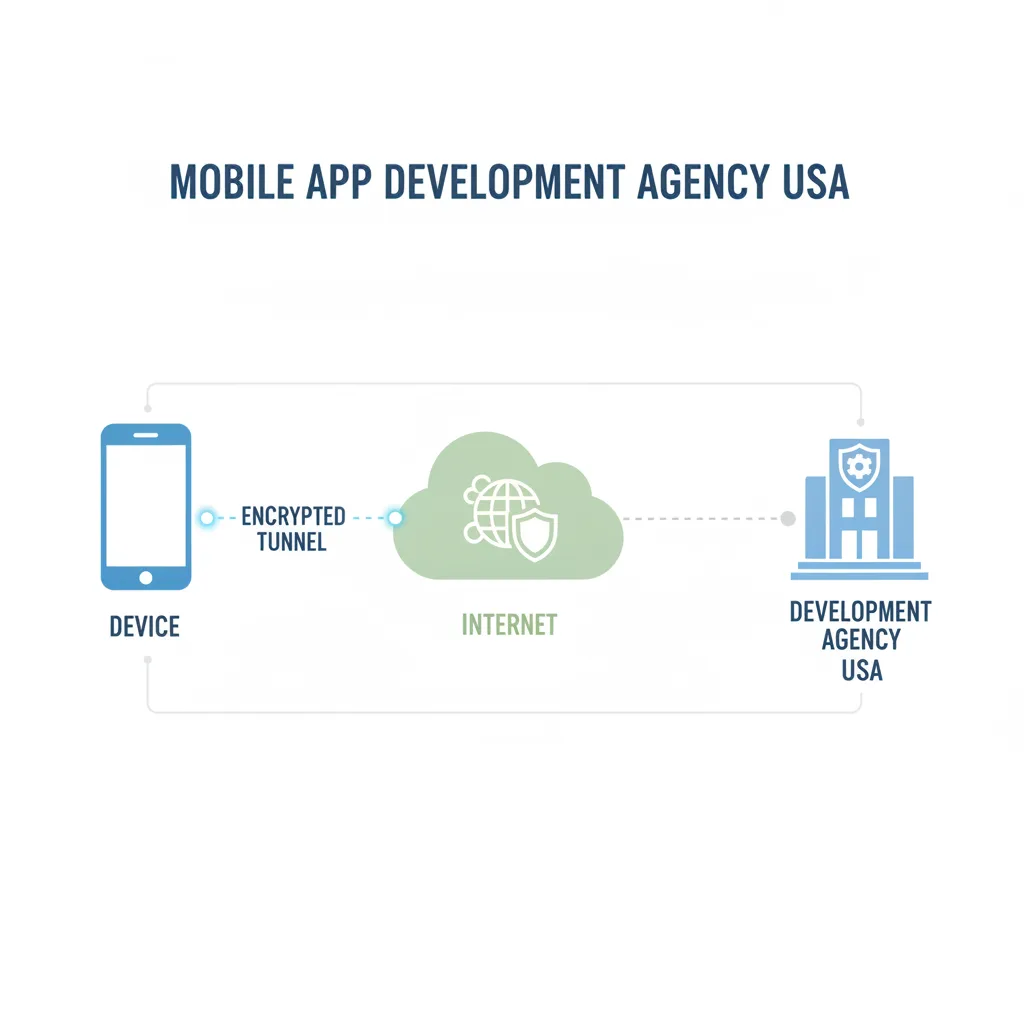
Selecting a mobile app development company USA partner requires evaluating capabilities beyond marketing materials. Use these criteria to assess potential agencies.
Evaluate Their Portfolio and Client Testimonials
Start with evidence of real work. Review apps they've built in the App Store and Google Play Store:
- Download their shipped apps and use them—this reveals quality better than screenshots
- Check user reviews and ratings to understand long-term product success
- Look for complexity relevant to your needs: Simple CRUD apps differ vastly from real-time multiplayer or AI-powered applications
- Verify client testimonials by researching the companies and projects mentioned
Be wary of agencies that only show mockups or prototypes without live products. If they claim to be the best mobile app development agency, their portfolio should prove it.
Ask About Their Development Process
Process determines outcomes. Understand how an agency operates:
#### Key Process Questions
- Agile vs. waterfall: Agile methodologies enable iteration; waterfall works for fixed-scope projects with stable requirements
- Communication cadence: Weekly demos and daily updates versus monthly check-ins
- Quality assurance: Automated testing, manual QA, device coverage, and bug tracking
- Code ownership: Clarify repository access and IP rights from day one
Request a detailed project timeline showing milestones, deliverables, and decision points. Transparent processes indicate professional operations.
Understand Pricing Models and Timelines
Budget and timeline expectations must align with reality. Common pricing structures include:
- Fixed-price contracts: Defined scope with agreed total cost; best for MVPs with clear requirements
- Time-and-materials: Hourly or weekly rates; flexible for evolving projects
- Retainer agreements: Ongoing development and maintenance at monthly rates
#### Typical Development Timelines
- Simple MVP: 3–4 months for basic functionality on one platform
- Full-featured app: 6–9 months for iOS and Android with complex features
- Enterprise applications: 9–12+ months with integrations, compliance, and custom infrastructure
Post-launch support matters as much as initial development. Clarify maintenance terms, update policies, and bug fix response times upfront.
Technical Capabilities and Team Expertise
Assess the agency's technical depth:
- In-house vs. outsourced: In-house teams offer better communication and quality control
- Stack expertise: Confirm proficiency in languages, frameworks, and cloud platforms relevant to your project
- Security and compliance: HIPAA, GDPR, SOC 2 certifications for regulated industries
- DevOps maturity: CI/CD pipelines, automated testing, and deployment automation
Ask about team composition: How many developers, designers, and project managers will work on your project? What's their experience level? Understanding the actual team matters more than agency size.
Why Startups and Product Teams Choose LunexLab
We differentiate through real product experience and technical depth.
Real products, not just contracts: Most agencies build for clients but never ship their own products. We built and maintain Fubble VPN, a consumer app serving real users. This experience informs every client project—we understand the challenges of App Store review, production monitoring, and user retention because we live them.
AI-first approach: While many agencies bolt AI onto traditional architectures, we design for AI integration from the foundation. Our expertise with modern AI platforms and on-device ML frameworks means your app can leverage cutting-edge capabilities without compromising performance or privacy.
Transparent pricing: We provide fixed-scope estimates after discovery phases. No surprise invoices or scope creep. You understand costs before committing to full development.
Founder-friendly: We speak the language of product teams, not enterprise procurement departments. Fast decision-making, direct communication with developers, and flexibility when priorities shift.
Ready to explore how we can help? Contact us or review our full services.
Comparison: Native vs. Cross-Platform Mobile App Development
Choosing between native mobile app development and cross-platform approaches impacts your project's trajectory. Here's how the approaches compare:
| Factor | Native (Swift/Kotlin) | Cross-Platform (React Native/Flutter) |
|---|---|---|
| Performance | Highest possible; direct hardware access | Near-native; minimal overhead for most apps |
| Development Speed | Slower; separate iOS and Android codebases | Faster; shared codebase with platform-specific modules |
| Platform Features | Full access to latest APIs immediately | Most features available; some require native modules |
| Cost | Higher; maintaining two codebases | Lower; unified development and maintenance |
| Maintenance | Separate updates for each platform | Single update deploys across platforms |
| Team Requirements | iOS and Android specialists | Cross-platform developers with native knowledge |
| Best For | Complex apps, games, AR/VR, media processing | MVPs, content apps, e-commerce, business tools |
| User Experience | Platform-perfect feel and interactions | Platform-appropriate with minor compromises |
Neither approach is universally superior. The right choice depends on your product requirements, budget, timeline, and long-term maintenance strategy. Our team helps you evaluate these tradeoffs based on your specific situation.
Mobile App Development Tech Stack at LunexLab
Our technical expertise spans modern frameworks and cloud platforms, enabling us to select the optimal stack for each project.
Frontend Technologies
- Native iOS: Swift, SwiftUI, UIKit, Core Data, Core ML
- Native Android: Kotlin, Jetpack Compose, Room, TensorFlow Lite
- Cross-platform: React Native, Flutter, Expo
Backend and Infrastructure
- Languages: Node.js, Python (FastAPI), Go
- Cloud platforms: AWS (Lambda, ECS, RDS, DynamoDB, S3), Google Cloud (Cloud Run, Firestore, Cloud Functions)
- Databases: PostgreSQL, MongoDB, Redis, Firebase Realtime Database
- API styles: REST, GraphQL, WebSocket
AI and Machine Learning
- Cloud AI: Google AI Studio (Gemini), AWS Bedrock, OpenAI API
- On-device ML: Core ML (iOS), TensorFlow Lite (Android)
- Computer vision: Google Cloud Vision, AWS Rekognition, custom models
DevOps and Quality
- CI/CD: GitHub Actions, GitLab CI, Bitrise
- Testing: Jest, Detox, XCTest, Espresso
- Monitoring: Firebase Crashlytics, Sentry, New Relic
- Analytics: Mixpanel, Amplitude, Firebase Analytics
This diverse toolkit allows us to architect solutions that balance performance, scalability, and maintainability while meeting your specific requirements.
Frequently Asked Questions
How much does it cost to build a mobile app in the USA?
Mobile app development costs typically range from $50,000 to $150,000 for an MVP, and $150,000 to $500,000+ for full-featured production apps. Factors affecting cost include platform choice (iOS, Android, or both), feature complexity, custom integrations, AI capabilities, and post-launch support requirements. At LunexLab, we provide fixed-scope estimates after a discovery phase where we analyze your requirements and define clear deliverables. This approach eliminates surprise costs while ensuring realistic budgets.
How long does mobile app development take?
An MVP typically requires 3–4 months from kickoff to App Store submission. Production-ready apps with advanced features generally take 6–12 months depending on scope. Timeline factors include: platform coverage (single vs. multi-platform), integration complexity (third-party APIs, AI features, payment systems), design iteration cycles, and QA thoroughness. We provide detailed project timelines during discovery, breaking development into clear milestones with concrete deliverables.
Should I build a native app or use a cross-platform framework?
Choose native development (Swift for iOS, Kotlin for Android) when you need maximum performance, cutting-edge platform features, or are building games, AR/VR experiences, or media-intensive applications. Select cross-platform frameworks (React Native or Flutter) for faster development, lower costs, and simplified maintenance—ideal for MVPs, content apps, e-commerce platforms, and most business applications. Cross-platform now delivers near-native performance for the majority of use cases. We evaluate your specific requirements and recommend the approach that best balances your technical needs with business objectives.
Do you provide post-launch support and maintenance?
Yes. We offer ongoing maintenance including bug fixes, OS compatibility updates, security patches, feature enhancements, and performance optimization. Our support packages include regular analytics reviews to identify improvement opportunities. Retainer agreements are available for continuous development beyond initial launch. Post-launch support ensures your app evolves with platform changes and user needs rather than becoming outdated.
Can you integrate AI features into my mobile app?
Absolutely. We specialize in AI-powered mobile applications including conversational interfaces, recommendation engines, image recognition, voice interfaces, and intelligent automation. Our team works with platforms like Google AI Studio for Gemini integration, AWS Bedrock for enterprise AI, and on-device ML frameworks for privacy-preserving intelligence. We design AI implementations that enhance user experience without compromising performance or requiring constant internet connectivity. Whether you need generative AI, computer vision, or predictive analytics, we architect solutions that deliver real value.
Get Started with LunexLab
Ready to build a mobile app that ships, scales, and succeeds? LunexLab brings product experience, technical depth, and AI expertise to every project.
Next Steps
- Schedule a discovery call: Contact us to discuss your project requirements and receive a detailed proposal
- Explore our capabilities: Review our services and technical expertise
- See our work: Check out how we built Fubble VPN from concept to production
We work with startups and product teams who value quality execution over cheap promises. If you're ready to invest in a mobile app development agency USA that understands both technical complexity and product strategy, let's talk.